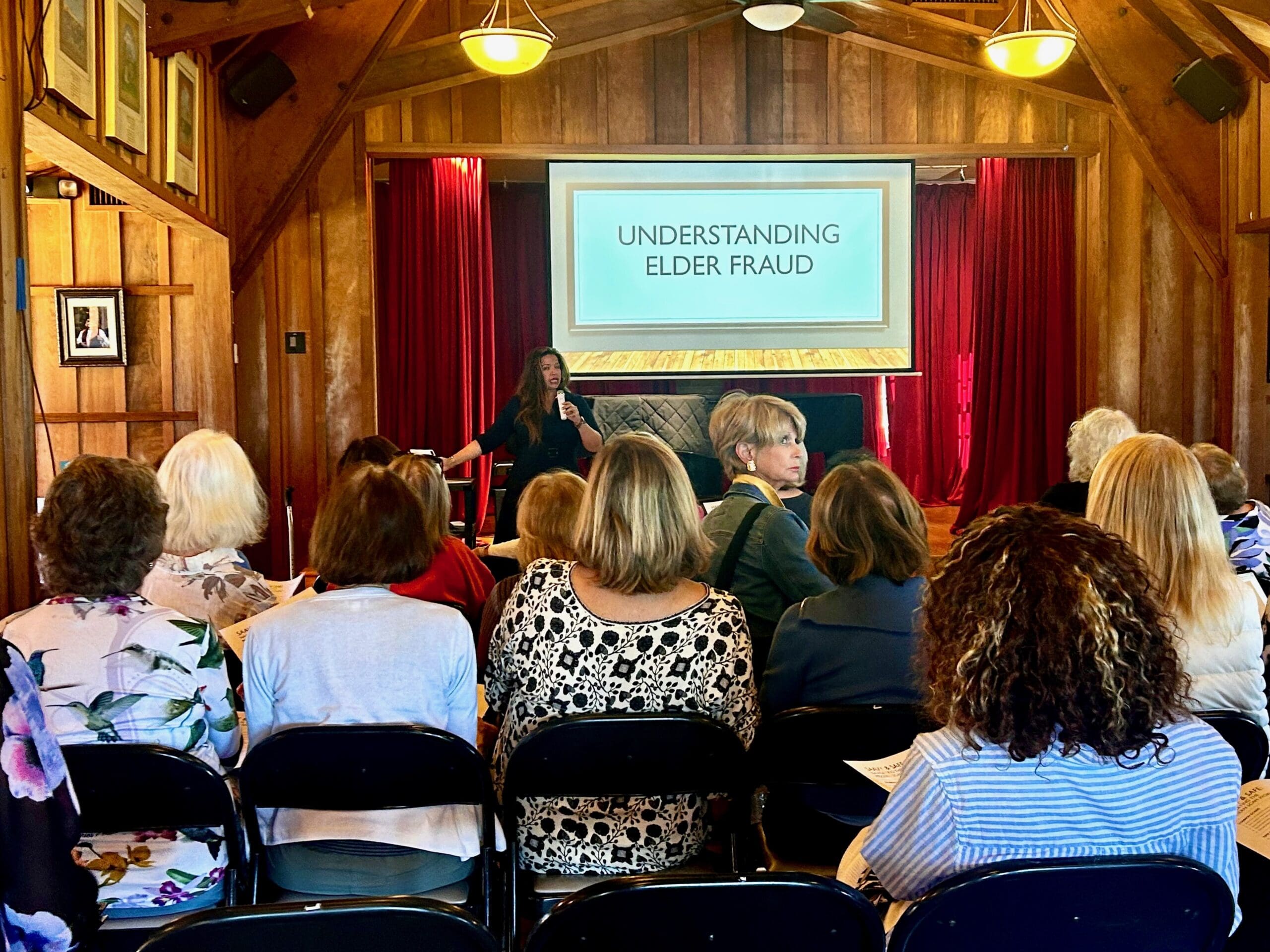
One of my favorite things about community work is education—helping people understand complex topics in ways that actually make sense to them. Recently, one of the most requested classes I’ve been asked to teach is about elder fraud, a topic that is incredibly widespread but often underreported due to embarrassment or confusion.
The reality is that many victims never report what happened, which means awareness and prevention are incredibly important.
What is Elder Fraud?
Elder fraud is the use of deception, coercion, or abuse of trust to exploit older adults—typically individuals over the age of 60—for financial gain.
While we often imagine fraud being committed by strangers or professional scammers, it is unfortunately often perpetrated by trusted individuals, including caregivers or even family members.
Why Are Seniors Targeted?
Older adults are frequently targeted for several reasons:
– They may have significant assets or savings
– Many were raised to be polite and trusting
– Scammers assume a lack of technological familiarity
– Some seniors experience isolation, making it easier for criminals to manipulate them without outside perspective
According to the FBI, 147,000 victims over age 60 reported fraud in 2024, totaling $4.9 billion in losses. That represents a 43% increase from 2023. The average loss was over $83,000, and more than 7,500 victims lost over $100,000.
And those numbers only represent reported cases.
The Most Common Elder Fraud Scams
Fraud schemes change constantly, but several patterns appear repeatedly.
Romance Scams
These scams often lead to the largest financial losses. Victims meet someone online through social media or dating platforms and develop what feels like a genuine relationship. Eventually, the scammer claims to experience a crisis and asks for financial help. I’ve personally worked with clients who lost over $100,000 in these situations.
Grandparent Scams
Scammers pose as grandchildren or other family members and claim they need urgent financial help—often for bail, medical emergencies, or travel problems.
Tech Support Scams
A pop-up or phone call claims your computer has a virus. The “technician” asks for remote access to fix the issue, giving them direct access to sensitive personal information.
Government Impersonation Scams
Fraudsters pretend to be representatives from agencies like the IRS or Social Security Administration, threatening arrest or legal consequences unless immediate payment is made—often through gift cards or wire transfers. Legitimate government agencies do not demand payment this way.
Charity, Lottery, and Investment Scams
These scams promise a large reward or opportunity, but require a fee, tax payment, or investment upfront.
Family or Caregiver Financial Abuse
One of the most troubling—and common—forms of elder fraud involves trusted individuals misusing their access to a senior’s finances. Often the victim becomes isolated from other family members while the perpetrator gains increasing control.
What Can You Do to Protect Yourself?
Prevention is the most effective defense. Once funds are transferred, they are often extremely difficult—or impossible—to recover.
A few important precautions include:
– Question urgent requests. Scammers rely on panic and pressure to override your normal decision-making. Pause and verify the story with someone you trust.
– Be cautious online. Only make purchases through secure websites (HTTPS), avoid clicking links in unexpected emails or texts, and keep antivirus software updated.
– Create a family password. A simple verbal password shared among family members can help confirm identities during emergency calls.
– Never send money or personal information to unverified individuals. This includes gift cards, wire transfers, cryptocurrency, or banking information.
If You Believe You’ve Been Scammed
Act quickly.
Report the incident to:
– Your local police department
– The FBI’s Internet Crime Complaint Center at ic3.gov
The Bottom Line
There is no foolproof way to prevent fraud. Criminals are constantly adapting their tactics—especially with the rise of AI and social media.
But awareness is one of the most powerful tools we have. Understanding how scams work can help you avoid becoming a victim—and help others recognize the warning signs before it’s too late.
And if it does happen, remember: you are not alone. These criminals are sophisticated and highly practiced at manipulation.
The more we talk about it, the better we can protect our communities.


leave a comment